

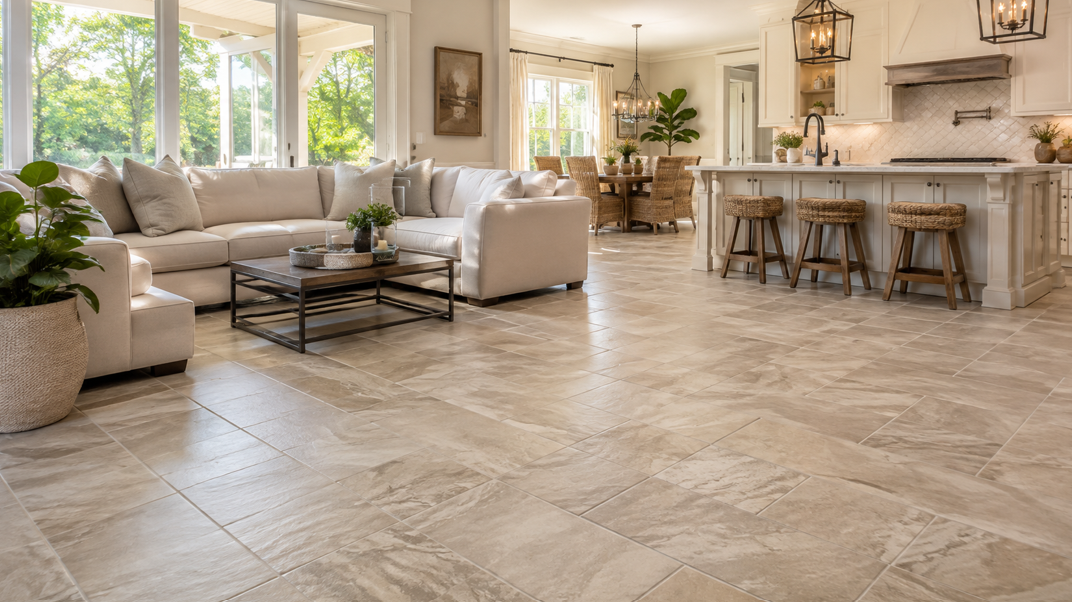
Louisiana summers place real demands on home finishes. Long periods of heat, high humidity, strong sunlight and frequent rain can affect flooring in kitchens, bathrooms, entryways, patios and ground-level rooms. For Baker homeowners planning a renovation, the right floor needs to feel comfortable, resist moisture and remain dependable through changing indoor and outdoor conditions.
Tile is a strong option because ceramic, porcelain and selected natural stone products tolerate warm environments well and do not react to humidity in the same way as many wood-based materials. Tile can also help an air-conditioned room feel cooler underfoot while providing a durable surface for busy households.
At Wholesale Flooring & Granite, homeowners can compare tile colours, textures, sizes and performance ratings in person. The established Baton Rouge warehouse showroom serves Baker and the wider metro area with direct pricing and practical guidance based on local climate conditions.
This guide explains how tile responds to Louisiana heat, which materials and finishes are worth considering, where summer-ready tile performs best and how careful installation protects the finished floor.
What Heat Resistance Really Means for Flooring
Heat resistance and surface comfort are related, but they are not identical. A flooring material may tolerate high temperatures without warping or softening, yet still become warm when exposed to direct sunlight. Understanding the difference helps homeowners choose the right tile for each room.
Ceramic and porcelain tile are fired at very high temperatures during manufacturing. Once installed, they remain dimensionally stable under normal residential heat and do not contain the same heat-sensitive layers found in some resilient flooring products. This makes tile a reliable option near sunny windows, in kitchens and in rooms that experience seasonal temperature changes.
Tile also has thermal mass. It absorbs and releases heat gradually rather than changing temperature immediately. Inside an air-conditioned Baker home, this quality can make tile feel pleasantly cool underfoot. In a sunroom or on an exposed patio, the same tile can absorb solar heat and become hot, particularly when the colour is dark.
For outdoor areas, heat resistance therefore involves more than asking whether the tile can tolerate summer temperatures. Colour, surface texture, shade, installation method and barefoot comfort all matter. A pale matte porcelain may remain more comfortable than a dark, polished surface in the same location.
The installation system matters as well. Tile, mortar, grout, movement joints and the base underneath the floor need to work together. Heat and moisture can cause surrounding building materials to expand and contract. A well-planned installation allows for that movement and reduces the risk of cracked grout or loose tile.
Porcelain Tile for Demanding Louisiana Conditions
Porcelain is one of the strongest choices for summer-ready flooring. It is dense, durable and available in a wide range of styles, including designs that resemble stone, concrete, wood and terrazzo.
Its low water absorption makes it valuable in humid or splash-prone areas. Baker homes often move between hot, damp outdoor air and heavily cooled indoor spaces. Porcelain handles these conditions well when the product is rated for the intended location and installed correctly.
For kitchens, porcelain provides resistance to spills, tracked-in moisture and everyday wear. In bathrooms and utility rooms, it offers a practical surface around sinks, showers and washing machines. Suitable exterior-rated porcelain can also work on covered patios, outdoor kitchens and other carefully prepared spaces.
Finish selection changes both appearance and performance. Matte and textured porcelain can provide useful grip in wet areas. Polished porcelain creates a more reflective, formal look, but it may show water spots more readily and can feel slick when wet. Product-specific slip ratings are worth reviewing for bathrooms, entries and outdoor applications.
Large-format porcelain is popular in open-plan homes because fewer grout lines create a calmer visual effect. The larger pieces require a flat, properly prepared substrate and experienced installation. Smaller formats can follow slopes more easily in shower floors and may provide more grip through additional grout joints.
Porcelain also offers design consistency. Homeowners who like the appearance of natural stone but prefer controlled colour and pattern can select from realistic stone-look collections without the sealing requirements associated with many natural materials.
Ceramic Tile for Comfortable Indoor Spaces
Ceramic tile remains an excellent choice for many indoor Baker applications. It is available in a broad range of colours, patterns and sizes and can provide exceptional value for kitchens, bathrooms, hallways and other residential rooms.
Ceramic is generally less dense than porcelain, so product ratings deserve attention. A tile designed for walls may not have the strength required for floors, and an indoor product may not suit exterior temperature and moisture exposure. Choosing a floor-rated ceramic tile for the correct application helps ensure dependable performance.
Inside the home, ceramic tile offers many of the same summer benefits as porcelain. It does not swell with humidity like some wood-based materials, it is straightforward to clean, and it can feel cool in air-conditioned rooms.
Ceramic also supports classic and decorative designs. Homeowners can create checkerboard floors, patterned bathroom surfaces, terracotta-inspired kitchens or simple neutral layouts. Smaller rooms may benefit from light-coloured ceramic that reflects natural light and keeps the space feeling open.
For heavily used entries, commercial areas or exterior settings, porcelain may provide the stronger fit. For many interior rooms, however, quality ceramic tile delivers durability, comfort and design flexibility at a competitive price.
Natural Stone: Beautiful, but Select Carefully
Natural stone brings organic variation that manufactured products cannot fully reproduce. Travertine, slate, limestone and granite tiles can create beautiful floors, but suitability depends on the stone and location.
Some varieties are porous and need sealing to reduce staining and moisture absorption. Softer stones may wear more readily than porcelain, while textured slate can offer useful grip. Exterior use also requires a stone, setting material and base rated for heat, rainfall and occasional cold spells.
Viewing several pieces together reveals the true colour and texture range. Baker homeowners who value natural character may find stone rewarding, while those prioritising lower maintenance may prefer stone-look porcelain.
Best Rooms for Heat-Resistant Tile
Different rooms create different summer challenges. Selecting tile by application leads to better performance than using one product throughout the home without considering moisture, sunlight and traffic.
Kitchens
Louisiana kitchens deal with cooking heat, spills and regular cleaning. Porcelain and floor-rated ceramic provide stable, easy-care surfaces. Matte finishes can reduce visible smudges, while medium tones often disguise crumbs and tracked-in dust. Large tiles can make an open kitchen feel spacious when the base is sufficiently flat.
Bathrooms
Bathrooms combine humidity, warm water and slippery surfaces. Textured or matte tile is worth considering for the main floor, while smaller mosaics work well in showers because additional grout joints provide traction and follow the drainage slope. Ventilation still helps protect grout, caulk, cabinetry and paint.
Entryways and Mudrooms
Baker homes often receive wet shoes, grit and yard debris during summer storms. Durable porcelain handles repeated cleaning, while mid-tone colours and textured finishes can help conceal daily marks.
Sunrooms
Sunrooms receive concentrated light and temperature changes. Pale or medium shades are generally more comfortable than dark colours in strong sun. Window coverings and ventilation also help control the room’s temperature.
Patios and Outdoor Kitchens
Exterior tile needs an outdoor-use rating, suitable slip resistance and a weather-ready installation system. Porcelain is often a strong candidate because of its density and low water absorption. Covered patios, pergolas and umbrellas also reduce solar gain and improve barefoot comfort.
Choosing Tile Colour for Hot Weather
Colour can affect how much solar energy a surface absorbs. Dark tile tends to become warmer in direct sunlight, while lighter colours generally reflect more heat. Indoors, this difference may be modest when the room is shaded and air-conditioned. Outdoors or beside large windows, it can become much more noticeable.
Warm beige, pale grey, cream and light stone-look tile can support a bright, comfortable summer palette. These colours also coordinate well with natural wood, white cabinetry and many granite or solid surface countertops.
Pure white floors create an airy appearance but can show dirt and grout discolouration more readily. Mid-tone floors often provide a useful balance between heat reflection and practical maintenance.
The finish affects the result too. A highly polished surface reflects light but may create glare and become slippery when wet. A matte or lightly textured finish often suits Louisiana entries, bathrooms and patios more effectively.
Before deciding, view full-size samples in the intended lighting. A tile that appears neutral in a showroom may show warm, cool or green undertones at home. Placing the sample beside cabinets, wall paint and countertop materials helps reveal those differences.
Tile Flooring and Louisiana Humidity
Heat receives much of the attention during summer, but humidity creates equally important flooring concerns. Louisiana humidity commonly remains high for long periods, and sudden rain can increase moisture exposure around doors, patios and ground-level rooms.
Ceramic and porcelain tile flooring does not expand and contract with humidity in the same way as many natural wood products. This makes tile a dependable choice for moisture-prone areas.
The layer beneath the tile still matters. Concrete slabs can transmit moisture, and leaks or poor drainage can affect the installation from below. Moisture testing and correct surface preparation help identify risks before tile is placed.
Movement joints also deserve attention in larger rooms and sun-exposed areas. They allow the tiled surface to respond to building movement and temperature changes without concentrating stress in the grout or tile.
Air conditioning and indoor moisture control support the entire home. Although tile itself handles humidity well, baseboards, cabinetry, drywall and furnishings perform better when indoor conditions remain controlled.
Promptly cleaning rainwater, pet bowl spills and plumbing leaks reduces slip hazards and protects grout and adjacent materials. For entrances, absorbent mats can capture water and grit before it travels across the floor.
Installation Details That Protect the Floor
A quality tile can underperform when installed over an unstable or uneven base. Preparation is one of the most important parts of a long-lasting floor.
The substrate needs to be clean, sound and flat enough for the selected tile size. Cracks in concrete may require assessment and treatment. Wood-framed floors need adequate stiffness so normal movement does not transfer into the tile.
The setting material needs to suit the tile, substrate and location. Exterior patios, large-format porcelain and wet rooms may require different products and techniques. Grout width also depends on tile size, edge consistency and layout.
Expansion and movement joints help manage changes caused by heat, moisture and building movement. Filling every edge tightly with rigid grout can create stress when the floor expands. Flexible joints at appropriate locations provide room for movement.
Outdoor installations also depend on drainage. Water needs a clear path away from the home rather than becoming trapped beneath or across the tiled surface. Proper slope, waterproofing and edge details protect both the tile and surrounding structure.
Professional installation is especially valuable for large-format tile, complex patterns, wet areas and exterior spaces. Accurate layout reduces awkward cuts and keeps transitions at doors, cabinets and adjoining floors looking intentional.
Summer-Friendly Design Ideas for Baker Homes
Heat-resistant performance does not require a plain design. Wood-look porcelain brings warmth without the moisture sensitivity of natural hardwood, and light oak or weathered neutral tones suit relaxed Louisiana interiors.
Stone-look porcelain works well in entries, bathrooms and patios. Travertine-inspired beige feels warm, while pale limestone and soft concrete looks support cleaner contemporary spaces.
For indoor-outdoor continuity, related collections may offer a smoother interior tile and a more textured exterior-rated version. Matched grout creates a continuous look, while contrasting grout makes the layout more prominent.
Caring for Tile During the Louisiana Summer
Routine maintenance helps tile remain attractive through wet weather, garden traffic and busy family schedules.
Sweep or vacuum regularly to remove grit that can scratch glazed surfaces over time. Clean with a suitable neutral product and avoid leaving soap residue, which can create a dull film or reduce traction.
Wipe up water promptly, especially near entrances and bathroom fixtures. Outdoor tile may need periodic rinsing to remove pollen, soil and organic residue. Shaded, damp areas deserve extra attention because mildew can develop on grout, caulk or nearby surfaces.
Grout care varies by product. Some grout types benefit from sealing, while others are designed for lower maintenance. An installer can explain the correct routine for the selected system.
Inspect exterior joints and transitions periodically. Cracked grout, loose tile or failed caulk may allow water to enter the installation. Early repair is usually more manageable than waiting for a small issue to spread.
Selecting the Right Tile for Your Project
Begin with the location. Decide whether the tile will be used indoors, outdoors, in a wet room or in a strongly sunlit area. Then compare water absorption, slip resistance, floor rating, texture and colour.
Think about how the floor will feel during daily use. A polished white tile may look striking but may not suit a wet family entry. A heavily textured exterior tile can provide grip but may take more effort to clean indoors.
Bring home samples where possible and view them during the brightest and darkest parts of the day. Consider how they coordinate with fixed features, including cabinets, countertops and wall colours.
Budget for the complete installation rather than the tile alone. Surface preparation, removal, underlayment, mortar, grout, trim, transitions and labour all contribute to the final cost. Warehouse-direct selection and wholesale pricing can help homeowners compare quality options while keeping the full project budget in view.
Prepare Your Baker Home for Louisiana Summer
Tile flooring is a reliable solution for Baker homes that face heat, humidity, strong sunlight and frequent summer rain. Porcelain provides excellent density and moisture resistance, ceramic offers versatile indoor value, and selected natural stone can deliver distinctive character with appropriate care.
The best choice depends on where the tile will be used. Colour affects solar heat absorption, texture influences grip, and product ratings determine whether a tile suits floors, wet rooms or outdoor exposure. Careful preparation and professional installation protect the surface from movement, moisture and everyday wear.
Wholesale Flooring & Granite helps homeowners compare tile, countertops, cabinets and coordinating finishes in one established Baton Rouge warehouse showroom. The team can explain material differences, recommend suitable options and help plan a floor that fits both the design and Louisiana climate.
To request a free estimate or arrange a showroom visit, contact us and begin planning a summer-ready tile floor for your Baker home.


