

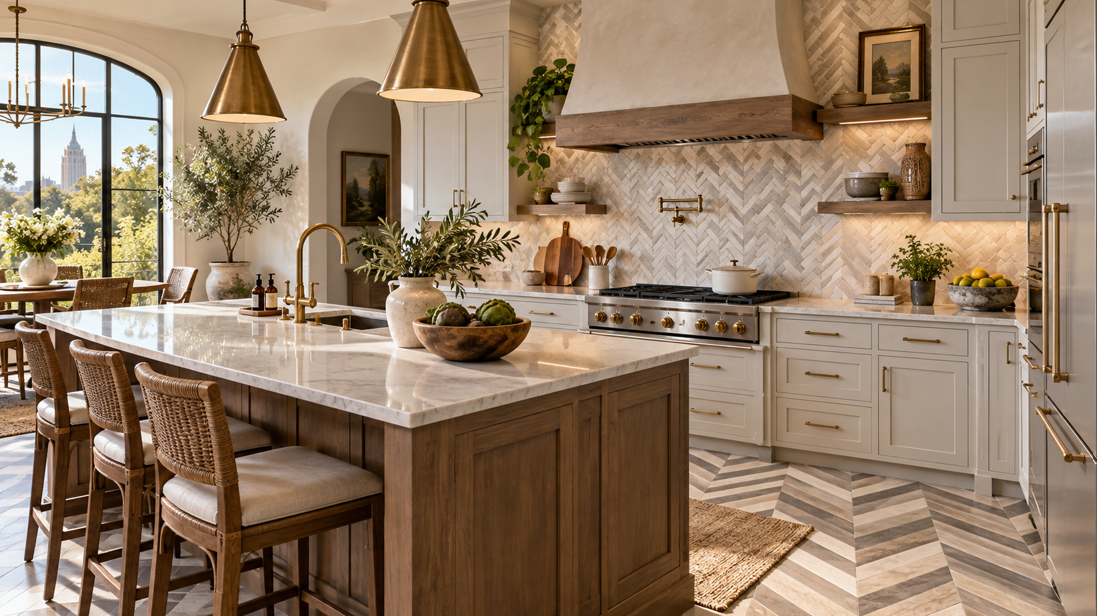
A kitchen floor or backsplash does more than cover a surface. It helps set the rhythm of the entire room. In 2026, Baton Rouge homeowners are increasingly looking beyond straight-laid tile and simple grids in favour of patterns that bring movement, texture, and personality into the kitchen. Two layouts stand out especially well: herringbone and chevron.
Both patterns create a distinctive zigzag effect, but they achieve it in different ways. Herringbone uses rectangular tiles arranged at angles, while chevron uses pieces cut so their ends meet in clean, continuous points. The result can range from subtle and classic to bold and highly architectural.
At Wholesale Flooring & Granite, homeowners can explore tile options in person and compare colours, sizes, textures, and finishes with guidance from a knowledgeable local team. For Baton Rouge kitchens, that hands-on selection process is especially useful because a pattern needs to look good while also fitting the room, the household, and Louisiana's humid climate.
If you are considering a patterned kitchen floor, backsplash, or feature area, here is what to know before choosing between herringbone and chevron.
Why Patterned Tile Is Having a Moment in Baton Rouge Kitchens
For years, many kitchens leaned towards simple straight-set layouts because they were familiar and easy to coordinate. Those layouts are still practical, but homeowners are increasingly using tile patterns to give kitchens more character without relying on loud colours or overly decorative materials.
Herringbone and chevron work well because the pattern itself becomes the design feature. A soft beige porcelain tile, warm stone-look tile, or classic white subway tile can feel completely different when installed in an angular layout. Instead of needing a highly patterned surface, the arrangement creates visual interest.
That flexibility makes these patterns particularly useful in Baton Rouge homes where kitchens often connect to living and dining spaces. In an open layout, a directional tile pattern can help define the kitchen visually while still allowing the flooring, cabinetry, and countertops to feel connected.
Herringbone often suits homeowners who want a timeless look with movement. Because the rectangular pieces overlap visually in a broken zigzag, the pattern has depth without appearing too precise or formal. It can work in traditional kitchens, transitional spaces, farmhouse-inspired rooms, and contemporary designs.
Chevron has a cleaner, sharper geometry. The angled ends meet to create repeated V shapes, producing a continuous line across the surface. That makes chevron an excellent choice for modern kitchens, statement backsplashes, or spaces where a more tailored appearance is desired.
Both layouts can also influence how a room feels. A pattern installed lengthwise can draw the eye through a narrow kitchen, while a carefully centred backsplash can create a natural focal point behind a range or sink. Pattern direction, tile size, and grout colour all affect the finished result, so planning the layout before installation is worth the effort.
Herringbone vs. Chevron: What Is the Difference?
Although the two patterns are often grouped together, they are not interchangeable.
Herringbone typically uses rectangular tiles. Each piece meets the side of another tile at an angle, creating a staggered zigzag. The ends do not form one uninterrupted point. This slightly broken geometry is what gives herringbone its familiar woven appearance.
Chevron uses tiles with angled ends, commonly cut so two pieces meet neatly in a V. These points line up across the installation, creating strong continuous rows. The look is more symmetrical and can feel more dramatic.
For a kitchen floor, herringbone is often the more forgiving visual choice. Its staggered pattern naturally disguises some everyday crumbs, marks, and movement better than a highly linear layout. It also pairs easily with many cabinet styles because the pattern is recognisable without overwhelming the room.
Chevron can create a stronger design statement. On a backsplash, the repeated points can pull the eye upward or across the wall. On a floor, chevron can make a long kitchen feel even more directional. That visual energy works especially well in spaces with simple cabinetry and restrained countertops.
The choice also affects installation. Both patterns require careful layout, but chevron generally depends on accurate angles and alignment so the points meet cleanly. Herringbone requires precise spacing and a well-planned starting point to keep the pattern square and balanced as it moves across the room.
Tile dimensions matter too. Smaller-format pieces create more visual movement and more grout lines. Larger pieces make the pattern feel calmer and more contemporary. Before settling on a size, it helps to view several tiles together rather than judging one sample by itself.
For homeowners who are unsure which layout fits their kitchen, seeing full-size samples under realistic lighting can make the decision much easier.
Choosing the Right Tile Material for the Pattern
Pattern is one part of the decision. The tile material has to suit the way the kitchen is used.
Porcelain is an excellent option for many Baton Rouge kitchen floors. It is dense, durable, and available in a wide range of looks, including natural stone, concrete, marble, and wood-inspired finishes. Porcelain can deliver the appearance of a more delicate material while offering practical performance for busy households.
Ceramic tile can also work beautifully, especially on backsplashes and walls. It offers broad colour and finish choices and can be an effective way to introduce herringbone without making the entire kitchen feel busy. Glossy ceramic may reflect more light, while matte finishes can create a softer, more relaxed appearance.
Natural stone brings variation that manufactured tile cannot fully duplicate. Each piece may include changes in tone, veining, and texture, which can make a herringbone installation particularly rich. Stone does, however, require greater attention to sealing and maintenance depending on the material.
For homeowners who like the warmth of wood but prefer the moisture resistance and easy care associated with tile, wood-look porcelain is worth considering. A herringbone wood-look floor can create the visual warmth of traditional parquet while offering a surface better suited to spills, muddy shoes, and active kitchens.
Midway through the planning process, visiting the local tile flooring selection can help you compare porcelain, ceramic, glass, and natural stone options side by side. Colour can look very different under showroom lighting than it does on a phone screen, and texture is difficult to judge without seeing and touching the material.
For floors, consider appearance alongside surface texture and traction. Kitchens are working spaces where water, cooking splashes, and everyday foot traffic are normal. A beautiful tile that also feels comfortable and secure underfoot is usually the stronger long-term choice.
Designing for Louisiana Humidity, Heat, and Everyday Kitchen Life
Baton Rouge kitchens have to handle more than style trends. Louisiana's climate brings heat, humidity, and significant rainfall, all of which make moisture-conscious material selection and installation important.
Tile itself is a strong fit for this environment because porcelain and many ceramic products do not react to humidity in the same way some wood-based materials can. That makes tile appealing for kitchens where exterior doors, pets, wet shoes, spills, and frequent cleaning may all add moisture to the space.
The installation system beneath the tile is as important as the surface. A sound subfloor, suitable underlayment, correct adhesives, properly finished grout, and attention to movement joints all contribute to a durable installation. In areas exposed to regular water, moisture management needs to be considered as part of the overall assembly rather than treated as an afterthought.
Patterned layouts deserve extra attention because they often contain more grout lines than large straight-set tile. Grout colour therefore becomes both a design and maintenance decision.
A contrasting grout can make every angle in a herringbone or chevron layout stand out. White tile with darker grout, for example, creates a highly graphic pattern. A grout colour closer to the tile creates a quieter effect and can make the surface feel more continuous.
For busy family kitchens, a mid-tone grout can also be practical because it is less likely to show everyday discolouration as quickly as very pale grout. Proper sealing, where appropriate for the grout and tile selected, can help with ongoing care.
Heat is another consideration. Tile tends to remain relatively cool underfoot, which many Louisiana homeowners appreciate through long warm seasons. In a kitchen that receives strong afternoon sun, lighter or mid-tone surfaces may also keep the room feeling visually cooler than very dark materials.
Humidity does not mean homeowners need to avoid decorative layouts. It simply makes correct material selection and professional installation more important. A well-installed patterned tile surface can deliver the visual impact of a design feature while remaining practical for daily Baton Rouge life.
Herringbone and Chevron Design Ideas for 2026
One of the reasons these patterns continue to attract attention is their versatility. They can be adapted to a wide range of kitchen styles without looking identical from one home to another.
For a warm, natural kitchen, consider stone-look porcelain in cream, sand, taupe, or soft limestone tones. Installed in herringbone, these colours create movement without becoming visually loud. They pair especially well with warm wood cabinetry, off-white cabinets, brushed metal hardware, and natural-looking countertops.
For a cleaner contemporary look, large-format rectangular tiles in a herringbone arrangement can create broader movement with fewer joints. Matte surfaces are especially effective when the goal is understated texture rather than shine.
A classic white backsplash can also feel fresh when the tile layout changes. Instead of a traditional horizontal subway pattern, herringbone introduces detail while keeping the colour palette simple. This is useful when the kitchen already contains a strong countertop pattern or prominent cabinet colour.
Chevron works particularly well as a focal feature. Consider using it behind a range, across a full-height backsplash, or in a defined section where the points can be centred on an architectural feature. Consistent alignment is important because the eye naturally follows the repeated V shapes.
Colour can change the personality of either layout. Warm beige, clay, muted green, charcoal, creamy white, and soft grey all create different moods while allowing the geometry to remain the focus. Baton Rouge homeowners who want a more individual look can also explore mixed-tone tiles that create subtle variation across the installation.
Another option is to use the pattern in one area and keep surrounding surfaces simpler. A herringbone backsplash with a straight-laid floor, for example, provides a focal point without layering competing patterns. Similarly, a patterned floor often looks strongest when countertops and wall finishes are calmer.
The goal is balance. A successful kitchen does not need every finish to compete for attention. Herringbone and chevron are most effective when the pattern supports the room's overall architecture, cabinet style, lighting, and countertop selection.
Planning the Layout Before Installation
Patterned tile rewards careful preparation.
Before installation begins, establish the visual centre of the room or feature wall. Starting in the wrong place can leave narrow cuts along highly visible edges or make a backsplash pattern appear off-centre behind a range.
It is also useful to dry-lay a portion of the tile. This allows you to see how colour variation, veining, and repeated graphics will interact once the pieces are placed together. With natural stone and stone-look products, mixing pieces from different boxes can create a more balanced distribution of tones.
Think about transitions as well. If the kitchen tile meets hardwood, luxury vinyl, carpet, or another tile in an adjacent room, the connection between surfaces needs to feel intentional. Pattern direction can help guide the eye through an open floor plan, but an abrupt change in scale or colour may make the transition more noticeable than expected.
Professional installation is especially valuable for herringbone and chevron because small alignment errors can become more obvious as the pattern expands. A precise first row, consistent spacing, and careful cuts around cabinets and walls make a significant difference to the finished appearance.
This is also where local product guidance can save time. Instead of choosing a pattern first and later discovering that a particular tile size, edge, or finish is awkward for the installation, homeowners can compare suitable options early in the process.
Is Herringbone or Chevron Better for Your Baton Rouge Kitchen?
There is no single pattern that works for every kitchen.
Herringbone is worth considering if you want a classic layout with movement, flexibility, and a slightly softer visual rhythm. It works particularly well in transitional spaces and in kitchens where the tile needs to complement several other finishes.
Chevron is an excellent choice when you want crisp geometry and a stronger focal point. It can make a simple material feel more architectural and works especially well in modern or streamlined kitchens.
For floors, consider the size of the room, amount of foot traffic, desired grout maintenance, and how the pattern will meet adjoining rooms. For backsplashes, focus on sightlines, cabinet widths, outlet placement, and whether the pattern will be centred on a range, sink, or other feature.
Most importantly, choose the material and layout together. A pattern that looks beautiful in a photograph may feel very different when scaled across your own kitchen. Seeing tile samples in person and discussing layout options before ordering can help prevent costly changes later.
Bring Your Tile Ideas to Life at Our Baton Rouge Showroom
Herringbone and chevron patterns give Baton Rouge homeowners a practical way to make a kitchen feel more customised without relying on short-lived novelty. With the right tile, grout, scale, and installation plan, either layout can create a kitchen that feels distinctive, polished, and comfortable for everyday use.
Wholesale Flooring & Granite has served the greater Baton Rouge area for more than 18 years, helping homeowners compare flooring and surface options with local guidance and access to wholesale pricing. Our warehouse-showroom model makes it easier to see materials in person, compare finishes, and make decisions with a clearer understanding of how the finished space can look.
If you are planning a new kitchen floor, backsplash, or full renovation, visit our showroom or contact us for a free estimate. Bring inspiration photos, cabinet samples, countertop colours, or measurements if you have them, and our team can help you narrow down tile options that suit your style, budget, and Baton Rouge home.


