

Louisiana kitchens work hard. Between daily cooking, family gatherings, summer heat, heavy rainfall, and year-round humidity, kitchen flooring needs to be more than beautiful. It needs to be durable, moisture-resistant, easy to clean, and comfortable for busy households.
That is why porcelain tile has become one of the most reliable options for Louisiana homeowners. It offers the look of natural stone, marble, concrete, wood, or classic ceramic designs, while providing excellent strength and moisture resistance. For kitchens in Baton Rouge, Denham Springs, Ascension Parish, Baker, and surrounding areas, porcelain tile flooring can handle the realities of a humid Southern home without sacrificing style.
At Wholesale Flooring & Granite, homeowners can explore high-quality tile options with expert guidance and warehouse-direct value. Whether you are planning a full kitchen remodel or replacing outdated floors, this guide explains why porcelain tile is such a smart choice for Louisiana kitchens in 2026.
Why Porcelain Tile Performs Well in Louisiana Kitchens
Porcelain tile is made from refined clay and fired at very high temperatures. This process creates a dense, strong, low-porosity tile that performs especially well in moisture-prone spaces. For Louisiana kitchens, that density is one of the biggest advantages.
Kitchens in this region face constant exposure to water and humidity. Spilled drinks, dishwasher leaks, sink splashes, wet shoes during rainy weather, cooking steam, and indoor-outdoor traffic are all part of daily life. A floor that absorbs moisture too easily can become harder to maintain over time. Porcelain tile is highly water-resistant, making it an excellent choice for homeowners who want a floor that can handle daily use with confidence.
Porcelain is also known for durability. It resists scratches, dents, stains, and surface wear better than many softer flooring materials. That matters in active kitchens where chairs move, pets run through the room, groceries are carried in, and families gather around the island.
Another benefit is heat resistance. Louisiana homes deal with long, hot summers, and kitchens can become warm during cooking. Porcelain tile remains stable in warm indoor conditions and does not soften or warp because of heat exposure.
Porcelain tile also offers design flexibility. Homeowners can choose from large-format tiles, stone looks, marble looks, wood looks, patterned tile, matte finishes, textured finishes, and neutral colours. This makes it suitable for traditional Louisiana interiors, modern farmhouse kitchens, transitional spaces, and clean contemporary designs.
For homeowners who want a long-lasting kitchen floor with strong climate performance, porcelain tile offers a dependable balance of beauty and practical value.
Porcelain Tile vs Ceramic Tile for Kitchen Floors
Porcelain and ceramic tile are often discussed together, but they are not identical. Both are made from clay and fired in a kiln, but porcelain is denser, less porous, and usually more durable. That difference matters in Louisiana kitchens.
Ceramic tile can be a beautiful and cost-effective option for walls, backsplashes, bathrooms, and lighter-use spaces. It comes in many colours, shapes, and patterns. In some kitchens, ceramic tile can work well when selected carefully and installed properly.
Porcelain tile, however, is usually the stronger choice for kitchen floors. Its low water absorption rate helps it resist moisture more effectively. This is especially valuable in homes across Baton Rouge and the greater metro area, where humidity and rainfall are part of the climate. Porcelain also tends to handle foot traffic, dropped kitchen items, and daily wear with greater reliability.
For kitchens that connect to outdoor patios, garages, laundry rooms, or back entrances, porcelain’s durability becomes even more helpful. These transition areas often see dirt, water, and heavy traffic. A dense porcelain tile floor can support those demands while staying easy to clean.
Another difference is body composition. Some porcelain tiles are through-body or colour-body products, meaning the colour extends deeper into the tile. This can help reduce the visibility of minor chips or wear. Not every porcelain tile has this feature, so it is worth reviewing product details when comparing options.
Ceramic can still be attractive for decorative kitchen backsplashes, accent walls, and lower-impact areas. For the main kitchen floor, porcelain often provides better long-term performance in humid Louisiana conditions.
The right choice depends on budget, design goals, household activity, and installation needs. For homeowners prioritising moisture resistance and durability, porcelain tile is often the stronger kitchen flooring option.
How Porcelain Tile Handles Humidity, Moisture, and Spills
Humidity is one of the biggest flooring considerations in Louisiana. Many homes experience moisture from the air, rainfall, cooking, dishwashing, and air conditioning cycles. Kitchen flooring needs to resist moisture while staying stable under changing indoor conditions.
Porcelain tile performs well because it does not swell, warp, or absorb moisture like some natural or wood-based materials can. This makes it especially useful in kitchens, breakfast areas, laundry-adjacent spaces, and open layouts where food prep and family activity overlap.
Spills are another daily concern. Water, coffee, cooking oil, sauces, juice, and wine can all land on a kitchen floor. With porcelain tile, most spills can be wiped away quickly without soaking into the tile surface. Proper grout sealing adds another layer of protection, helping reduce staining and moisture absorption in the grout lines.
Mould and mildew prevention is also important in humid climates. Porcelain tile itself does not provide a food source for mould, and its moisture resistance helps keep the surface cleaner. The grout lines need proper care, but with good installation and regular cleaning, porcelain tile can support a healthier kitchen environment.
For homes in Ascension Parish, Baker, and nearby communities, spring and summer rainfall can also increase tracked-in moisture. A porcelain tile kitchen floor can handle wet shoes, pet paws, and quick clean-ups better than many less moisture-resistant flooring options.
Texture matters as well. A tile with a matte or lightly textured surface can offer better traction than a highly polished tile. In kitchens where spills are common, slip resistance is worth considering. Homeowners can still achieve a beautiful look while choosing a finish that supports everyday safety.
For Louisiana kitchens, porcelain tile’s moisture resistance is one of its most valuable benefits.
Best Porcelain Tile Styles for 2026 Louisiana Kitchens
Porcelain tile has changed significantly in recent years. Homeowners no longer have to choose between practicality and style. In 2026, porcelain tile options can look like natural stone, marble, limestone, concrete, handmade tile, or hardwood, giving Louisiana kitchens a wide range of design possibilities.
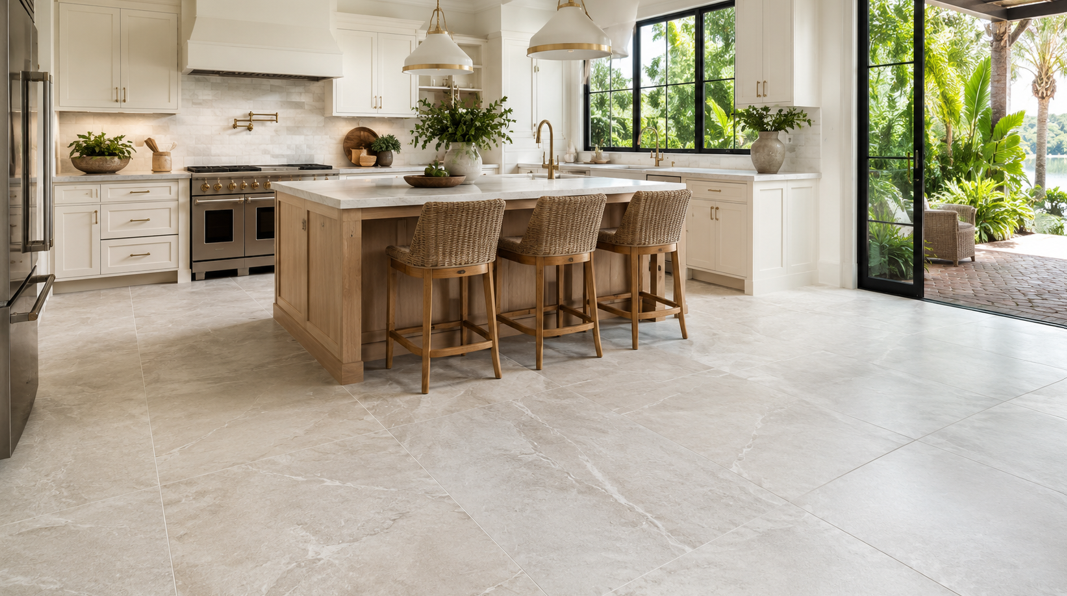
Large-format porcelain tile is one of the most popular modern choices. Larger tiles create fewer grout lines, which can make the kitchen feel more open and easier to maintain. In open-concept homes, large-format tile helps create a seamless look between the kitchen, dining area, and living space.
Stone-look porcelain is another excellent choice for Baton Rouge-area homes. It offers the appearance of limestone, travertine, slate, or marble with easier maintenance than many natural stones. This is helpful for homeowners who want natural style without worrying as much about sealing, etching, or moisture sensitivity.
Wood-look porcelain tile is also popular in Louisiana kitchens. It creates the warm look of hardwood while offering stronger resistance to moisture and heat. This can be especially appealing for homeowners who love wood tones but want a more humidity-resistant kitchen floor.
Marble-look porcelain brings a premium, elegant feel to kitchens and bathrooms. Soft white, grey, beige, and warm cream marble looks can brighten a space while pairing well with granite countertops, solid surface countertops, painted cabinets, or stained wood cabinetry.
Patterned porcelain tile can add personality to smaller kitchens, breakfast nooks, pantry areas, or kitchen entries. Geometric patterns, encaustic-inspired looks, and subtle tone-on-tone designs can make the floor a design feature without overwhelming the room.
When browsing tile flooring, it helps to compare samples with cabinets, countertops, backsplash materials, and lighting. The same tile can look warmer, cooler, lighter, or darker depending on the surrounding finishes.
Choosing the Right Finish, Size, and Colour
Porcelain tile selection involves more than choosing a colour. Finish, size, texture, grout colour, and layout all affect how the floor looks and performs.
Matte finishes are a strong choice for Louisiana kitchens because they reduce glare and often provide better traction than polished surfaces. A matte porcelain tile can feel warm, natural, and practical. It also works well with current kitchen trends, including soft neutrals, wood cabinetry, brushed metal hardware, and textured backsplashes.
Polished porcelain can look beautiful, especially in formal kitchens or modern spaces, but it may feel more slippery when wet. For busy family kitchens, a low-sheen or textured finish is often worth considering.
Tile size also matters. Large-format tiles, such as 12x24, 24x24, or larger, can make a kitchen feel more spacious. They reduce grout lines and create a cleaner look. Smaller tiles can work well in compact spaces, patterned layouts, or classic designs. The right size depends on the kitchen layout, subfloor condition, and design goals.
Colour choice affects both style and maintenance. Light porcelain tile can brighten a kitchen and make the room feel larger. Warm beige, cream, taupe, and greige tiles are excellent choices for Louisiana homes because they feel inviting and coordinate easily with many cabinet colours. Darker tiles can add contrast and sophistication, but they may show dust, crumbs, or water spots more readily.
Grout colour deserves attention too. A grout colour close to the tile colour creates a smoother, quieter look. A contrasting grout colour highlights the tile pattern and shape. For busy kitchens, medium-toned grout can be practical because it tends to show less everyday wear than very light grout.
The best porcelain tile floor feels cohesive with the entire kitchen, not separate from it.
Installation Matters for Long-Term Performance
Even high-quality porcelain tile needs proper installation to perform well. A durable tile floor starts with a stable subfloor, careful layout planning, appropriate setting materials, and clean grout work.
The subfloor is especially important. Tile needs a surface that is flat, strong, and properly prepared. If the subfloor flexes or has uneven areas, the tile or grout can be affected over time. Professional evaluation helps identify concerns before installation begins.
Moisture control is another important factor in Louisiana homes. While porcelain tile resists moisture well, the installation system still needs careful planning. Proper underlayment, waterproofing where appropriate, and grout sealing can all support long-term performance.
Layout planning also makes a visual difference. In open kitchens, tile lines need to feel balanced with cabinets, islands, hallways, and adjacent rooms. A thoughtful layout can reduce awkward cuts and make the finished floor look more refined.
Grout selection affects durability and appearance. High-quality grout can resist stains, moisture, and cracking better than lower-quality products. Sealing grout may also be recommended, depending on the material used. In humid kitchens, grout maintenance is an important part of keeping the floor looking fresh.
Professional installation is especially useful for large-format porcelain tile. Larger tiles require accurate levelling and careful handling. If the floor is not prepared well, large tiles can show unevenness more clearly.
For homeowners in Baton Rouge, Denham Springs, Baker, and Ascension Parish, installation quality can make the difference between a floor that looks good at first and a floor that performs beautifully for years. Porcelain tile is a durable material, but the finished result depends on skilled workmanship.
Maintenance Tips for Porcelain Kitchen Floors
One of the reasons homeowners choose porcelain tile is its straightforward maintenance. A well-installed porcelain kitchen floor is simple to clean and easy to live with.
Daily maintenance can be as simple as sweeping, vacuuming with a hard-floor setting, or using a dust mop to remove crumbs and grit. This helps protect the surface and keeps the kitchen looking clean.
For deeper cleaning, warm water and a pH-neutral floor cleaner are often enough. Harsh chemicals, waxes, and abrasive scrubbers are best avoided because they can leave residue or affect the finish. Porcelain tile does not need polishing or sealing the way some natural stone floors do.
Grout lines need regular attention. Even though the tile surface resists moisture, grout can collect dirt or stains if neglected. Choosing a quality grout and sealing it when recommended can make maintenance much easier. A soft brush and gentle cleaner can help refresh grout lines when needed.
For kitchens with pets, children, and frequent cooking, porcelain tile offers excellent resilience. It handles food spills, pet water bowls, muddy shoes, and active traffic well. Placing mats near sinks, dishwashers, and exterior doors can add comfort and help collect extra moisture.
In humid Louisiana weather, good airflow also helps. Running kitchen ventilation while cooking, using air conditioning properly, and cleaning spills promptly can support a cleaner indoor environment.
Porcelain tile is not a high-maintenance floor, which is one reason it remains popular. With consistent care and good grout maintenance, it can stay beautiful through years of family meals, holiday gatherings, and everyday kitchen use.
Is Porcelain Tile Right for Your Louisiana Kitchen?
Porcelain tile is an excellent choice for many Louisiana kitchens because it is durable, moisture-resistant, heat-resistant, and available in a wide range of styles. It works especially well for homeowners who want a floor that can handle humidity, spills, heavy use, and warm Southern weather.
It is a strong fit for family kitchens, open-concept layouts, homes with pets, rental properties, outdoor-adjacent kitchens, and spaces where easy cleaning matters. It can also create a premium look when paired with beautiful countertops, updated cabinets, and a coordinated backsplash.
The main consideration is comfort underfoot. Tile is firm, which some homeowners notice during long cooking sessions. Area rugs or cushioned kitchen mats can help add comfort near sinks, islands, and prep areas. Tile can also feel cooler underfoot than some flooring materials, though many Louisiana homeowners appreciate that during warm months.
Another consideration is installation. Porcelain tile is a long-lasting investment, and proper installation is important. Working with an experienced team helps protect that investment and ensures the finished floor looks polished.
For homeowners comparing kitchen flooring options in 2026, porcelain tile offers one of the best combinations of style, durability, and climate performance. It brings the design flexibility homeowners want and the moisture resistance Louisiana kitchens need.
Bring Durable Porcelain Tile Flooring into Your Louisiana Kitchen
Porcelain tile flooring is a smart, long-lasting option for Louisiana kitchens because it stands up well to humidity, heat, spills, moisture, and daily household activity. With today’s wide range of colours, finishes, sizes, and patterns, homeowners can create a kitchen that feels beautiful, practical, and built for real life.
Whether you prefer stone-look tile, wood-look porcelain, large-format designs, marble-inspired styles, or warm neutral finishes, the right selection can improve both the look and performance of your kitchen. For Baton Rouge-area homes, porcelain tile offers a reliable way to combine design and durability in one floor.
Wholesale Flooring & Granite helps homeowners compare tile options, understand climate-specific performance, and choose materials that fit their kitchen, lifestyle, and budget. With warehouse-direct value and knowledgeable local guidance, planning your flooring project becomes more straightforward.
To explore porcelain tile options for your Louisiana kitchen, contact us or visit the Baton Rouge showroom to start planning your project.
Featured Image: A bright Louisiana kitchen with durable porcelain tile flooring, warm cabinetry, and natural light.


