

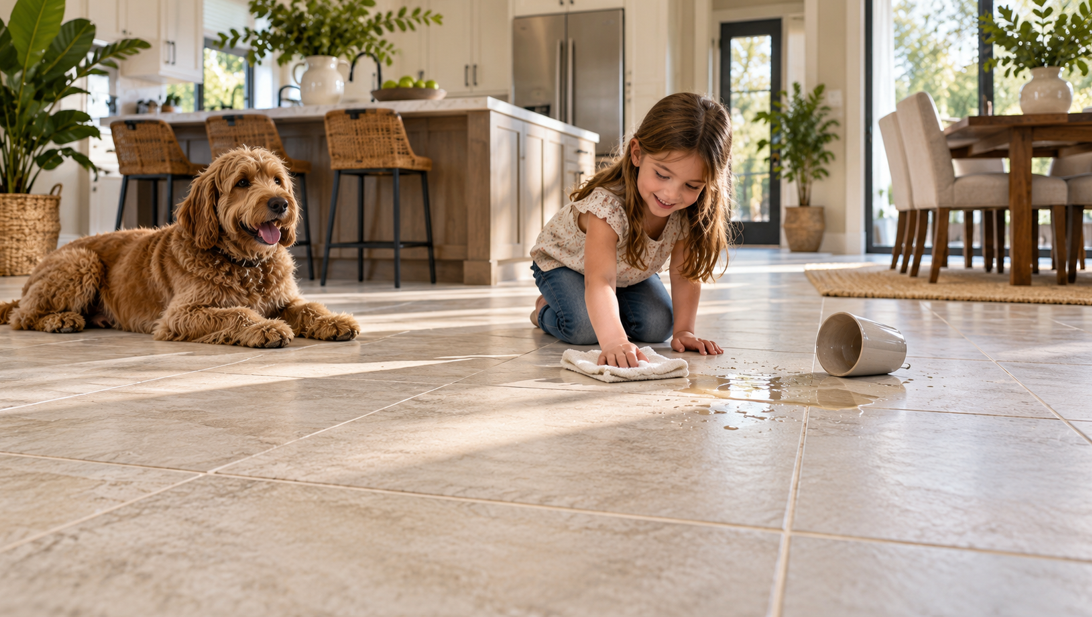
Family life can be hard on floors. Spilled drinks, muddy shoes, cooking splashes, pet accidents, dropped food, art projects, and everyday traffic all leave their mark over time. In a busy Louisiana household, flooring has to handle those realities while still looking good enough to support the style of the home.
For families in Baker, tile is an excellent option because it combines durability, moisture resistance, and a wide range of colours and designs. Certain tile products are especially well suited to households where stain resistance and easy maintenance are priorities.
At Wholesale Flooring & Granite, homeowners can explore tile options in person and compare porcelain, ceramic, natural stone, and other materials with help from a knowledgeable local team. That makes it easier to find a floor that fits both the design of the room and the way the household actually lives.
The key is choosing the right tile, finish, grout, and installation system. A beautiful surface is only part of the equation. For Baker families who want flooring that can cope with daily messes, moisture, and Louisiana weather, practical performance deserves equal attention.
What Makes Tile Flooring Stain-Resistant?
Tile is often described as easy to clean, but stain resistance varies depending on the material.
Porcelain is one of the strongest choices for busy family floors. It is dense and has very low moisture absorption, which helps reduce the opportunity for spills to penetrate the tile itself. Glazed porcelain also has a protective surface that can make routine cleaning particularly straightforward.
Ceramic tile can offer good stain resistance as well, especially when it has a durable glazed finish. It is commonly used in kitchens, bathrooms, laundry rooms, entryways, and other areas where household spills are expected.
Natural stone works differently. Materials such as certain marbles, limestones, travertines, and other natural stones can be more porous than porcelain or glazed ceramic. They can still perform beautifully, but sealing and proper maintenance become more important when stain prevention is a priority.
The finish matters too.
A smooth glazed surface can be easier to wipe clean than a heavily textured tile, although floor tiles also need appropriate traction for the space. Deep surface textures may hold dirt more readily, especially in kitchens or entryways where grease, soil, and outdoor debris can accumulate.
For this reason, the most practical family flooring often balances cleanability with slip resistance rather than focusing exclusively on one feature.
Colour and pattern also affect how a floor performs visually. A very light, solid-coloured floor may reveal every crumb or mark, while an extremely dark surface can show dust and water spots. Mid-tone patterns, stone looks, and tiles with natural colour variation can be more forgiving between cleaning sessions.
Stain resistance therefore involves more than choosing a tile labelled durable. The material, finish, colour, grout, room, and household habits all work together.
Why Porcelain Tile Is a Strong Choice for Busy Baker Homes
Porcelain deserves particular attention when the goal is a durable, family-friendly surface.
Because porcelain is fired to create a dense tile body, it generally absorbs very little water. That characteristic makes it well suited to rooms where spills, wet shoes, pets, or moisture are part of everyday life.
In a Baker kitchen, porcelain can handle the normal messes associated with cooking and family meals. Tomato sauce, juice, coffee, cooking oils, and other common spills are easier to manage when they remain on a dense surface rather than soaking into it.
In an entryway, porcelain can cope well with dirt and moisture tracked indoors after Louisiana rain. In a laundry room, it provides a hard-wearing surface around appliances and utility areas. In bathrooms, moisture resistance is especially valuable.
Porcelain also gives homeowners considerable design freedom.
Modern products can recreate the appearance of marble, limestone, concrete, terrazzo, hardwood, and other materials. A homeowner may therefore choose the warmth of a wood-inspired look or the elegance of natural stone while gaining the practical characteristics associated with porcelain.
Wood-look porcelain can be especially useful for families who like the visual character of timber but want a surface that is more tolerant of water and staining. It can work across kitchens, dining spaces, hallways, and other high-traffic areas where easy maintenance is important.
Stone-look porcelain offers another practical option. It can provide the variation and depth associated with natural stone without necessarily requiring the same sealing routine as a porous stone product.
Large-format porcelain can also reduce the overall number of grout lines, depending on the room and tile dimensions. Fewer joints can create a cleaner visual appearance and simplify routine maintenance.
When comparing tile flooring for a busy household, it is worth seeing several finishes in person. A colour that looks attractive online may appear very different under natural light, and surface texture is difficult to judge from photographs alone.
For families in Baker, the strongest option is often the one that combines practical stain resistance with a design they will still enjoy years from now.
Do Not Forget the Grout
Homeowners often focus on the tile itself when thinking about stains, but grout can have a major influence on how easy the finished floor is to maintain.
Traditional cement-based grout can be more porous than porcelain or glazed ceramic. That means spills, dirt, and moisture may become visible in grout lines even when the tile remains unaffected.
Grout selection therefore deserves careful attention.
One of the first decisions is colour. Bright white grout can create a crisp, attractive contrast, but it may require more visible upkeep in a heavily used kitchen or entryway. Mid-tone grey, beige, taupe, or other colours closer to the tile can often disguise routine wear more effectively.
Matching the grout closely to the tile also creates a calmer appearance. Contrasting grout makes individual tiles and patterns stand out, which can be beautiful, but it also places greater visual emphasis on every grout line.
For family flooring, there is no universally correct choice. The best solution depends on the design, traffic level, cleaning preferences, and room.
Certain grout products are formulated for improved stain resistance, and sealers may be appropriate for some installations. Product instructions and installer recommendations are valuable here because different grout systems have different care requirements.
Professional installation also matters.
Consistent joints, proper curing, suitable materials, and good workmanship contribute to easier long-term maintenance. A stain-resistant tile cannot compensate for poorly finished grout or installation problems around edges and transitions.
In kitchens and bathrooms, paying particular attention to areas around sinks, dishwashers, tubs, showers, and exterior doors can help create a more practical overall floor.
For households with children or pets, it is worth thinking about grout maintenance before selecting a highly detailed layout with many small tiles. Smaller tile formats create more grout lines. That may be desirable for style or traction, but it also creates more joints to maintain.
Larger tiles can reduce grout coverage, while patterned or mosaic installations create additional texture and visual interest. The best choice balances the look of the room with the amount of maintenance the household is comfortable managing.
Louisiana Humidity, Rain, and Everyday Moisture
Stain resistance is only one part of flooring performance in South Louisiana.
Baker homeowners also live with humidity, frequent rainfall, warm temperatures, and the moisture that can enter a home through everyday routines. Wet shoes, umbrellas, pets, outdoor traffic, bathroom steam, cooking moisture, and spills all contribute.
That makes moisture-conscious flooring especially valuable.
Porcelain and glazed ceramic tile are popular options for humid environments because the tile itself does not react to seasonal moisture in the same way some moisture-sensitive flooring materials can.
That does not mean the entire installation is automatically protected from moisture.
The substrate, underlayment, grout, movement joints, adhesives, transitions, and perimeter details all contribute to long-term performance. In rooms with higher water exposure, the system beneath the visible tile deserves as much consideration as the surface itself.
Ground-level spaces can benefit from particular attention to moisture conditions before installation. If a concrete slab has existing moisture issues, those conditions need to be evaluated and addressed as part of the project rather than hidden beneath new flooring.
Louisiana humidity also makes regular cleaning and ventilation valuable, especially in kitchens, bathrooms, laundry rooms, and other areas where moisture can linger.
Mould and mildew are most likely to develop where moisture, organic residue, and limited ventilation come together. Keeping grout and floor edges clean, wiping standing water, and maintaining good indoor airflow can help reduce those conditions.
Tile itself is relatively easy to clean, which is one reason it remains a practical choice for Louisiana households.
For Baker families who move frequently between indoor and outdoor spaces, placing mats at entrances can also make a noticeable difference. Catching soil and moisture before they spread across the floor reduces the amount of cleaning required and helps protect grout from unnecessary dirt.
The result is a flooring system that works with Louisiana living rather than requiring the household to constantly work around it.
Best Tile Choices for Kitchens, Dining Areas, and Entryways
Different rooms create different types of stains.
Kitchens
Kitchens see food, cooking oil, sauces, drinks, and everyday spills. They also experience frequent foot traffic.
Dense porcelain or glazed ceramic tile can work particularly well here. Matte or lightly textured finishes may offer a comfortable balance between cleanability and traction.
A stone-look porcelain floor can hide normal crumbs and small marks while still creating an upscale appearance. Warm beige, grey, taupe, and mixed neutral tones are especially versatile with common cabinet and countertop colours.
Dining Areas
Dining rooms and breakfast areas face many of the same spills as kitchens, particularly in households with younger children.
Using the same tile across a connected kitchen and dining space can create visual continuity while making cleaning simpler. Large-format tile is particularly effective in open-plan areas because it can make the floor feel less visually busy.
Entryways and Mudroom Areas
Entryways often receive some of the toughest daily treatment.
Rainwater, soil, grass, leaves, and outdoor debris can all be tracked inside. A patterned or mid-tone porcelain tile can help disguise dirt between cleanings while standing up well to repeated traffic.
Texture is useful here because wet footwear can make very smooth surfaces less comfortable underfoot. A tile designed for floor use with appropriate traction is worth considering.
Laundry Rooms
Laundry spaces combine water exposure, detergents, appliances, and regular household traffic.
Tile creates a practical surface beneath and around washers and utility sinks, and a stain-resistant product can simplify the occasional detergent or household-product spill.
For all these rooms, the best tile is not necessarily the product with the most dramatic appearance. Practical flooring often comes from finding the point where durability, maintenance, safety, and design overlap.
Choosing Colours and Patterns That Hide Everyday Wear
Stain resistance helps keep flooring looking good, but thoughtful design can make a floor even more forgiving.
Highly uniform surfaces tend to reveal marks more easily. A solid white floor may show dirt quickly, while a solid black tile can highlight dust, pet hair, and dried water spots.
Tiles with subtle movement can be more practical.
Stone-inspired patterns, lightly mottled colours, terrazzo effects, concrete looks, and softly varied surfaces break up the visual field. Small marks are less noticeable because the floor already contains natural-looking variation.
This does not mean the room needs to feel busy.
A warm limestone-look porcelain tile, for example, can offer subtle variation while still creating a calm, neutral foundation. Grey concrete-look tile can give a modern interior texture without overwhelming the cabinetry or furnishings.
For family kitchens, warm neutral floors are especially flexible. They coordinate well with white, cream, wood, grey, green, and blue cabinetry, allowing homeowners to update paint or hardware later without replacing the floor.
Patterned layouts can add additional personality.
Herringbone, offset brick, diagonal layouts, and other arrangements can make relatively simple tile feel customised. When stain resistance is a priority, homeowners can still enjoy these patterns while choosing a practical porcelain or ceramic product.
Grout colour becomes particularly important with patterned installations because the joints may form a larger part of the overall visual design.
For Baker homes where children, pets, entertaining, and everyday traffic are part of the routine, forgiving colour variation can provide valuable peace of mind without sacrificing style.
Cleaning and Maintaining Stain-Resistant Tile
Tile is relatively straightforward to maintain, but a few consistent habits help keep it looking its best.
Regular sweeping or vacuuming removes grit before it can collect in grout lines or scratch certain finishes. Damp cleaning then removes the fine residue that dry cleaning may leave behind.
For spills, quicker clean-up is generally better, particularly with products that contain strong colours, oils, or sticky ingredients.
The cleaning product matters too.
A cleaner compatible with the specific tile and grout system helps avoid residue and unnecessary surface damage. Natural stone requires different care from porcelain, so identifying the material before using stronger cleaning products is important.
Abrasive tools are rarely necessary for routine porcelain or ceramic maintenance. Gentle cleaning carried out regularly is typically more effective than allowing heavy build-up and then relying on aggressive scrubbing.
Grout lines may need separate attention from time to time, particularly in kitchens and entryways. Following the grout manufacturer's care instructions can help protect stain-resistant treatments or sealers where applicable.
Families can also reduce floor maintenance through simple preventative measures:
Use mats at frequently used entrances to collect moisture and outdoor soil.
Wipe food and drink spills before they dry.
Use felt or suitable protective pads beneath furniture that moves regularly.
Keep pet feeding areas clean and place washable mats beneath water bowls where helpful.
Avoid allowing standing water to remain around doors, appliances, or plumbing fixtures.
Follow the care recommendations for the exact tile and grout selected.
These habits are manageable and can help a well-selected tile floor maintain its appearance for many years.
A Practical Flooring Choice for Baker Families
A family floor has to survive real life. It needs to handle spills, muddy shoes, moisture, meals, pets, visitors, and countless ordinary moments without turning floor care into a constant project.
Stain-resistant tile gives Baker homeowners an excellent combination of durability and design flexibility. Porcelain and glazed ceramic products can be particularly effective for kitchens, bathrooms, dining spaces, laundry rooms, and entryways where easy cleaning and moisture resistance matter.
The strongest result comes from looking beyond the tile alone. Grout, colour, surface texture, installation quality, Louisiana humidity, and the way the household uses each room all influence long-term performance.
Wholesale Flooring & Granite has served the greater Baton Rouge area for more than 18 years, helping homeowners compare flooring and surface materials with knowledgeable local guidance and access to wholesale pricing. Visiting the showroom allows you to see colours and textures in person rather than making an important flooring decision from a small screen.
If your Baker home needs flooring that can keep up with family life, visit our showroom or contact us for a free estimate. Bring photos, measurements, cabinet samples, or design ideas, and the team can help you compare tile options that balance stain resistance, durability, value, and the look you want for your home.


